Choosing a BMW X5: What Are Your Options?
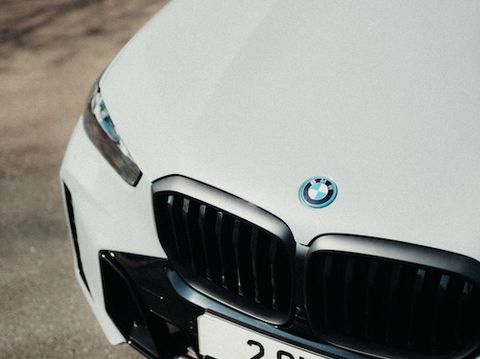
The BMW X5 has been a major part of the premium SUV market since the original model arrived in 1999. Now several generations into its lifespan, the X5 has developed from a luxury four-wheel-drive vehicle into a broad model range covering efficient diesel engines, plug-in hybrid technology and extremely powerful BMW M derivatives.
For used buyers, this variety means there is much more to choosing an X5 than deciding on a trim level. Models such as the xDrive30d and xDrive40d prioritise diesel torque and long-distance ability, while the xDrive45e and newer xDrive50e introduce plug-in hybrid capability. At the other end of the range are V8-powered models including the M50i, M60i xDrive and X5 M Competition.
This guide explores the principal BMW X5 models available across recent generations and explains how their powertrains, performance and intended uses differ.
BMW X5
BMW refers to the X5 as a Sports Activity Vehicle, combining the elevated driving position and versatility of a large SUV with road-focused handling and premium comfort.
The fourth-generation G05 X5, introduced in 2018, represented a substantial change from its predecessor. BMW increased its overall dimensions and wheelbase while introducing a more advanced interior, updated xDrive all-wheel-drive technology and an eight-speed Steptronic automatic transmission across the range. Selected versions could also be configured with a third row of seats.
Some of the key X5 models buyers may encounter include:
- BMW X5 xDrive30d - A six-cylinder diesel that balances strong torque with everyday efficiency.
- BMW X5 xDrive40d - A more powerful six-cylinder diesel with mild-hybrid technology on later examples.
- BMW X5 xDrive40i - A six-cylinder petrol alternative offering smooth and responsive performance.
- BMW X5 xDrive45e - A plug-in hybrid combining a six-cylinder petrol engine with an electric motor.
- BMW X5 xDrive50e - The newer and substantially more powerful successor to the xDrive45e.
- BMW X5 M50d - An earlier M Performance diesel model with a four-turbo six-cylinder engine.
- BMW X5 M50i - A V8-powered M Performance model sitting below the full X5 M.
- BMW X5 M60i xDrive - The later V8 M Performance version of the X5.
- BMW X5 M Competition - The flagship high-performance model developed by BMW M.
BMW X5 xDrive30d
The BMW X5 xDrive30d has long been one of the core models within the range and is particularly common on the used market.
Fourth-generation examples use a 3.0-litre straight-six diesel engine, although output differs according to age. Earlier G05 versions produced 265 hp before the introduction of updated mild-hybrid engines.
The current xDrive30d develops a total system output of 298 hp and 670 Nm of torque, using 48-volt mild-hybrid technology alongside its six-cylinder diesel engine. BMW quotes a 0-62 mph time of 6.1 seconds.
Common specifications on used examples include:
- BMW X5 xDrive30d xLine - A more traditional luxury-focused version with exterior detailing designed to emphasise the X5's SUV character.
- BMW X5 xDrive30d M Sport - Introduces M aerodynamic styling, larger alloy wheels and a more performance-inspired interior.
- BMW X5 xDrive30d M Sport Pro - Selected later examples add further M-specific styling and equipment to the M Sport specification.
BMW X5 xDrive40d
The BMW X5 xDrive40d builds on the characteristics of the xDrive30d with additional performance.
BMW introduced a 48-volt mild-hybrid version of the fourth-generation xDrive40d in 2020. Its 3.0-litre straight-six diesel produces 340 hp and 700 Nm of torque, accompanied by an electric starter-generator designed to support the combustion engine. An eight-speed Steptronic transmission and xDrive all-wheel drive are standard.
Used examples are commonly found in M Sport specification.
- BMW X5 xDrive40d M Sport - Combines the stronger six-cylinder diesel engine with BMW's sportier M Sport exterior and interior treatment.
- BMW X5 xDrive40d M Sport Pro - Later vehicles may feature additional M styling and equipment through the M Sport Pro package.
BMW X5 xDrive40i
The BMW X5 xDrive40i offers a petrol-powered alternative to the diesel models.
When the fourth-generation X5 was launched, the xDrive40i used a 3.0-litre straight-six turbocharged petrol engine producing 340 hp and 450 Nm of torque. BMW quoted 0-62 mph in 5.5 seconds for the original G05 version.
As with other standard X5 models, xDrive40i versions can be found in specifications including:
- BMW X5 xDrive40i xLine - A luxury-focused specification with more traditional exterior detailing.
- BMW X5 xDrive40i M Sport - Gives the petrol X5 a more assertive appearance through M Sport styling and equipment.
BMW X5 xDrive45e
The BMW X5 xDrive45e introduced a much more capable plug-in hybrid system to the fourth-generation X5 range.
Rather than combining an electric motor with a four-cylinder engine, the xDrive45e uses a 3.0-litre straight-six petrol engine. Together, the petrol and electric systems produce 394 hp and 600 Nm of torque. BMW originally quoted an electric-only range of up to 54 miles and a 0-62 mph time of 5.6 seconds.
Used versions commonly include:
- BMW X5 xDrive45e xLine - Combines plug-in hybrid technology with the more understated xLine design.
- BMW X5 xDrive45e M Sport - Adds the more aggressive styling and interior treatment associated with M Sport.
- BMW X5 xDrive45e M Sport Pro - Selected later examples receive additional M-inspired exterior and interior details.
BMW X5 xDrive50e
The BMW X5 xDrive50e replaced the xDrive45e as part of the major update to the fourth-generation X5.
Although the basic principle remains similar, BMW substantially upgraded the plug-in hybrid system. The xDrive50e combines a six-cylinder petrol engine with a more powerful electric motor to deliver 490 hp and 700 Nm of torque.
BMW quotes 0-62 mph in 4.8 seconds, while the official electric driving range increased to as much as 68 miles under WLTP testing when the refreshed model was introduced.
The xDrive50e therefore offers considerably more than reduced fuel consumption on shorter journeys. With almost 500 hp available, it also delivers acceleration that places it much closer to BMW's M Performance models.
For buyers who have convenient access to charging but do not want to compromise on performance, the xDrive50e is one of the most versatile versions of the modern X5.
BMW X5 M50d
The BMW X5 M50d was one of the most distinctive diesel models offered during the earlier years of the fourth-generation X5.
Its 3.0-litre straight-six diesel engine used four turbochargers to produce 400 hp and 760 Nm of torque. BMW quoted a 0-62 mph time of 5.2 seconds when the model was launched.
Unlike the regular xDrive30d, the M50d was positioned as an M Performance model and received additional chassis, braking, styling and interior changes.
- BMW X5 M50d - The core M Performance diesel model with 400 hp, xDrive all-wheel drive and dedicated M Performance equipment.
- BMW X5 M50d with additional option packages - Used examples can differ significantly because many vehicles were ordered with additional comfort, technology and BMW Individual options.
BMW X5 M50i
For buyers wanting V8 petrol power without moving to the full X5 M Competition, BMW offered the X5 M50i.
Its 4.4-litre twin-turbocharged V8 produces 530 hp and 750 Nm of torque, enabling the X5 M50i to accelerate from 0-62 mph in approximately 4.3 seconds.
The M50i also received an M Sport differential, model-specific suspension technology, an M Sport exhaust and exterior details separating it from standard X5 models.
It occupies an interesting position within the used range. The M50i is considerably quicker and more characterful than the standard petrol and diesel versions, but it is not as specialised as the full BMW X5 M Competition.
BMW X5 M60i xDrive
The BMW X5 M60i xDrive succeeded the M50i when BMW refreshed the fourth-generation X5.
It retains a 4.4-litre V8 petrol engine but incorporates 48-volt mild-hybrid technology. Total output remains 530 hp with 750 Nm of torque, and BMW quotes 0-62 mph in 4.3 seconds.
The M60i sits between the mainstream X5 range and the dedicated BMW M model.
Its specification includes:
- 4.4-litre M TwinPower Turbo V8
- Eight-speed Steptronic Sport automatic transmission
- BMW xDrive all-wheel drive
- M Sport differential
- M-specific exterior and interior details
The M60i is therefore aimed at buyers who want genuinely rapid V8 performance without moving to the more focused chassis and extreme performance of the X5 M Competition.
BMW X5 M Competition
The BMW X5 M Competition occupies the top of the performance hierarchy.
It is developed by BMW M rather than simply receiving an M Sport appearance package. Its powertrain, suspension, drivetrain, cooling systems and chassis are engineered around substantially higher performance.
The latest version uses a 4.4-litre twin-turbocharged V8 with 48-volt technology, producing 625 hp and 750 Nm of torque. Power is sent through an eight-speed M Steptronic transmission and M xDrive all-wheel-drive system.
BMW quotes 0-62 mph in 3.9 seconds and an electronically limited top speed of 155 mph.
Equipment specific to the X5 M Competition includes:
- M TwinPower Turbo V8 petrol engine
- M xDrive all-wheel-drive system
- Active M Differential
- Adaptive M Suspension
- M Steptronic Sport transmission with Drivelogic
- Dedicated BMW M exterior and interior design
Earlier BMW X5 Models
Because the BMW X5 has been produced for more than 25 years, the used market extends well beyond the current G05 generation.
BMW offered SE and M Sport specifications in the UK during this period, while later model years introduced additional equipment and engine changes.
Earlier X5 generations use different engines, transmissions and technology, so buyers should avoid assuming that two models carrying the same xDrive30d or xDrive40d badge will have identical specifications.
Which BMW X5 Model Is Best?
Choosing the right BMW X5 is largely determined by mileage, driving habits and how much emphasis you place on performance.
For many buyers, the X5 xDrive30d is the most rounded option. It combines the smoothness of a six-cylinder engine with useful diesel torque and is particularly well suited to motorway mileage. Later mild-hybrid examples also offer significantly more power than early fourth-generation versions.
Petrol buyers may want to consider an xDrive40i, while those who can charge regularly have two particularly interesting options in the xDrive45e and xDrive50e.
The xDrive45e remains a capable used plug-in hybrid with 394 hp, while the newer xDrive50e increases output to 490 hp and offers a much longer official electric range.
Drivers looking for more performance have several options. The M50d provides an unusual high-performance diesel experience, while the M50i and newer M60i xDrive introduce V8 petrol power without going as far as the full BMW M model.
At the top of the range, the X5 M Competition is the obvious choice when performance takes priority. With 625 hp and dedicated BMW M chassis technology, it offers an entirely different driving experience from the regular X5.
Specification should be considered alongside the engine. xLine models traditionally have a more luxury-focused appearance, whereas M Sport models feature more aggressive body styling, larger wheels and M-specific interior elements. BMW officially offered both xLine and M Sport versions when the fourth-generation X5 was introduced.
Ultimately, the breadth of the X5 range is one of its main strengths. Buyers can choose anything from a comfortable six-cylinder diesel to an electric-assisted plug-in hybrid or a 625 hp V8 performance SUV while retaining the core space and premium character associated with the X5.
Find a Used BMW X5 at Saxtons
Saxtons has a selection of used BMW X5 models, with recent stock including xDrive30d, xDrive40d and xDrive45e variants across diesel mild-hybrid and petrol plug-in hybrid powertrains.
Browse the latest used BMW X5 models available at Saxtons to compare engines, mileage, age and specification. As equipment can differ considerably between model years and individual vehicles, checking the complete specification and service history will help you identify the X5 that best suits your requirements.
 4.1
(3,000+ reviews)
4.1
(3,000+ reviews)
 4.6
(8,000+ reviews)
4.6
(8,000+ reviews)
 4
(250+ reviews)
4
(250+ reviews)