Inside the Volkswagen Tiguan: Power, Traction and Technology
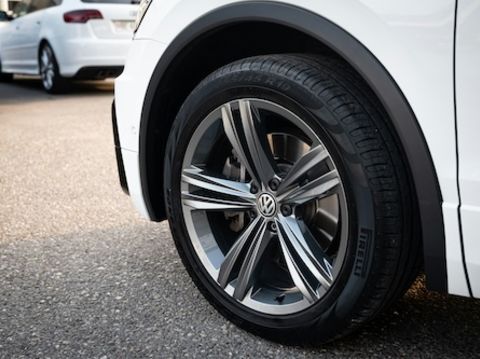
The Volkswagen Tiguan has developed into one of Volkswagen's most important SUVs, combining family-friendly practicality with a broad choice of engines and specifications. Since the first generation appeared in 2007, the range has expanded to cover petrol and diesel power, plug-in hybrid technology, 4MOTION all-wheel drive and the high-performance Tiguan R.
For used buyers, the Tiguan badge can cover several very different vehicles. A 1.5 TSI is geared towards straightforward everyday driving, while a 2.0 TDI may be better suited to regular motorway mileage. The eHybrid brings the option of electric-only journeys, whereas the 320 PS Tiguan R provides performance on an entirely different level.
Volkswagen launched the third and current generation in 2024, adding new eTSI mild-hybrid engines, significantly improved eHybrid models and updated technology. This guide looks at the key Volkswagen Tiguan models buyers may encounter and how the different powertrains compare.
Volkswagen Tiguan SUV
The standard Volkswagen Tiguan is a five-seat family SUV positioned above the smaller T-Roc and below larger Volkswagen SUVs. Its relatively compact exterior dimensions are combined with a flexible interior, making it suitable for commuting, family journeys and longer trips.
Three generations have now been produced. The first arrived in 2007, the second followed in 2016 and the current third-generation Tiguan reached the market in 2024.
Depending on age, buyers may find versions including:
- Volkswagen Tiguan 1.5 TSI - A widely available petrol model offering a useful balance between performance and everyday running costs.
- Volkswagen Tiguan 1.5 eTSI - The newer mild-hybrid petrol version introduced with the third generation.
- Volkswagen Tiguan 2.0 TDI - A diesel option particularly suited to longer journeys and higher annual mileages.
- Volkswagen Tiguan 2.0 TDI 4MOTION - Combines diesel power with Volkswagen’s all-wheel-drive system.
- Volkswagen Tiguan eHybrid - A plug-in hybrid allowing shorter journeys to be completed using electric power.
- Volkswagen Tiguan 2.0 TSI 4MOTION - A stronger petrol model available in selected generations and specifications.
- Volkswagen Tiguan R - The performance-focused second-generation flagship producing 320 PS.
- Volkswagen Tiguan Allspace - A longer version of the second-generation Tiguan offering considerably more interior room and the option of seven seats.
Volkswagen Tiguan 1.5 TSI
The 1.5 TSI became one of the core petrol engines in the second-generation Tiguan and remains widely available on the used market.
Later examples produce 150 PS and commonly use Volkswagen’s seven-speed DSG automatic gearbox, although manual versions were also produced during the second generation.
The 1.5 TSI uses Active Cylinder Technology, which can deactivate cylinders under suitable conditions to reduce fuel consumption when less engine power is required.
Used specifications can include:
- Volkswagen Tiguan 1.5 TSI Match - A practical specification balancing equipment and everyday usability.
- Volkswagen Tiguan 1.5 TSI Life - A later trim with a relatively understated exterior design.
- Volkswagen Tiguan 1.5 TSI Elegance - Places greater emphasis on comfort and exterior detailing.
- Volkswagen Tiguan 1.5 TSI R-Line - Combines the petrol engine with sportier bumpers, wheels and interior styling.
- Volkswagen Tiguan 1.5 TSI R-Line Edition - Selected later vehicles receive additional equipment alongside the R-Line design.
The 150 PS 1.5 TSI is a particularly useful all-round choice for drivers whose mileage does not necessarily justify a diesel. It offers enough performance for family and motorway use without stepping up to one of the larger 2.0-litre engines.
Volkswagen Tiguan 2.0 TDI
Diesel engines have played an important role throughout the Tiguan’s history, with the 2.0 TDI being particularly common on the used market.
Power outputs vary considerably according to generation and year, but the 150 PS version is one of the most widely available later second-generation models.
Compared with the 1.5 TSI, the 2.0 TDI provides stronger low-speed torque and can be better suited to drivers who regularly undertake longer motorway journeys.
Used versions include:
- Volkswagen Tiguan 2.0 TDI Match - A diesel specification focused on useful everyday equipment.
- Volkswagen Tiguan 2.0 TDI SEL - A higher-specification version found among pre-facelift second-generation models.
- Volkswagen Tiguan 2.0 TDI Life - A later diesel specification with an updated equipment package.
- Volkswagen Tiguan 2.0 TDI Elegance - Adds more comfort and premium exterior detailing.
- Volkswagen Tiguan 2.0 TDI R-Line - Combines diesel economy with the more purposeful R-Line appearance.
- Volkswagen Tiguan 2.0 TDI R-Line Edition - A later high-specification version with additional equipment.
Volkswagen Tiguan 2.0 TDI 4MOTION
Selected Tiguan diesel models add Volkswagen’s 4MOTION all-wheel-drive system.
Rather than being permanently limited to front-wheel drive, 4MOTION can distribute drive between the axles as conditions require, giving the vehicle additional traction.
The exact diesel output depends on the model year. Across different versions of the second-generation Tiguan and Tiguan Allspace, Volkswagen offered more powerful 2.0 TDI engines alongside the familiar 150 PS model.
The current third-generation Tiguan also continues to offer a more powerful TDI with 4MOTION. Volkswagen’s broader third-generation engine range includes a 193 PS 2.0 TDI that is paired with all-wheel drive.
A Tiguan 2.0 TDI 4MOTION can make sense for drivers who:
- Regularly travel on rural or poorly surfaced roads
- Want additional traction in difficult weather
- Tow frequently
- Prefer diesel torque for longer journeys
- Need more pulling power than a conventional front-wheel-drive model
Volkswagen Tiguan eHybrid
Volkswagen introduced plug-in hybrid power to the Tiguan as part of the second-generation facelift.
The original Tiguan eHybrid uses a 1.4-litre TSI petrol engine alongside an electric motor. Together they produce 245 PS, with Volkswagen quoting a 0-62 mph time of 7.5 seconds.
This model differs substantially from a conventional mild hybrid because its battery can be charged externally. When sufficient charge is available, shorter journeys can therefore be completed using electric power.
The second-generation eHybrid offered an official electric range of up to approximately 31 miles under WLTP testing, depending on configuration.
Used specifications can include:
- Volkswagen Tiguan eHybrid Life - Combines plug-in hybrid technology with a practical standard specification.
- Volkswagen Tiguan eHybrid Elegance - Places more emphasis on comfort and luxury-oriented detailing.
- Volkswagen Tiguan eHybrid R-Line - Adds sportier styling to the plug-in hybrid drivetrain.
Volkswagen Tiguan R
The Volkswagen Tiguan R represents the performance extreme of the second-generation range.
Rather than simply applying R-Line styling to a regular Tiguan engine, Volkswagen R developed a dedicated performance model powered by a 2.0-litre turbocharged petrol engine producing 320 PS and 420 Nm of torque.
Power is delivered through a seven-speed DSG gearbox and a specialised 4MOTION system incorporating R-Performance Torque Vectoring. This system can vary drive not only between the front and rear axles but also between the two rear wheels.
Volkswagen quotes 0-62 mph in approximately 4.9 seconds, giving the Tiguan R acceleration far beyond that of the standard petrol and diesel models.
Other changes include:
- R-specific sports seats
- Dedicated R body styling
- Performance braking system
- Adaptive DCC suspension lowered by 10 mm
- R driving mode
- Four-outlet sports exhaust
- 20-inch wheels as standard on the original specification
The distinction between an R-Line and a Tiguan R is important. R-Line is primarily a trim and styling package available with conventional engines, whereas the Tiguan R is a dedicated 320 PS performance model.
Volkswagen Tiguan Allspace
The Volkswagen Tiguan Allspace takes the second-generation Tiguan and extends its wheelbase and overall length to create additional passenger and luggage room.
Its main advantage is the availability of a third row of seats, allowing selected versions to carry up to seven people. Volkswagen states that the five-seat configuration can provide up to 1,920 litres of luggage capacity with the rear seating folded.
The Allspace uses familiar Tiguan petrol and diesel engines, including:
- Volkswagen Tiguan Allspace 1.5 TSI - A 150 PS petrol version suitable for general family use.
- Volkswagen Tiguan Allspace 2.0 TDI - A diesel option aimed particularly at longer journeys.
- Volkswagen Tiguan Allspace 2.0 TDI 4MOTION - Combines diesel power with all-wheel drive.
- Volkswagen Tiguan Allspace 2.0 TSI 4MOTION - More powerful petrol versions were offered with all-wheel drive.
The facelifted Allspace engine range included a 150 PS 1.5 TSI, 150 PS and 200 PS diesels, plus 190 PS and 245 PS 2.0-litre petrol options in European markets.
Specifications include Life, Elegance and R-Line on later examples, while older UK vehicles may carry different trim names.
New Volkswagen Tiguan 1.5 eTSI
The third-generation Tiguan introduces a new 48-volt mild-hybrid petrol powertrain carrying the eTSI name.
Volkswagen offers the 1.5 eTSI with outputs of 130 PS and 150 PS. Both use the manufacturer’s latest 1.5-litre TSI evo2 engine and are paired with a DSG automatic gearbox.
Unlike an eHybrid, the eTSI cannot be plugged into an external power source. Instead, its electrical system provides assistance to the combustion engine and recovers energy during deceleration.
Current UK specifications include:
- Volkswagen Tiguan 1.5 eTSI Life
- Volkswagen Tiguan 1.5 eTSI Match
- Volkswagen Tiguan 1.5 eTSI R-Line
- Volkswagen Tiguan 1.5 eTSI Black Edition
The 130 PS version is offered in selected specifications, while the 150 PS engine is more widely available across the range.
New Volkswagen Tiguan 2.0 TDI
The arrival of the third generation has not brought an end to diesel power.
Volkswagen continues to offer a 2.0-litre TDI producing 150 PS in the current UK Tiguan. Volkswagen quotes a 0-62 mph time of 9.4 seconds for this version.
This model continues the role of previous 150 PS Tiguan diesels, providing an alternative to the eTSI for drivers who regularly travel longer distances.
The wider third-generation engine range also includes a more powerful 193 PS TDI paired with 4MOTION, although engine availability varies between markets and specifications.
New Volkswagen Tiguan eHybrid 204 PS
The third-generation Tiguan introduces a substantially improved plug-in hybrid system compared with its predecessor.
The lower-output version combines a 1.5-litre petrol engine with an electric motor for a total system output of 204 PS. A new 19.7 kWh usable-capacity battery represents a major increase over the previous Tiguan eHybrid.
Current UK figures show an official combined electric range of approximately 72 to 75 miles, depending on trim.
The newer system also supports:
- AC charging at up to 11 kW
- DC rapid charging at up to 50 kW
- Significantly greater electric range than the previous Tiguan eHybrid
- A six-speed DSG transmission
The 204 PS eHybrid is available across several current specifications, including Life, Match, Style, R-Line and Black Edition.
New Volkswagen Tiguan eHybrid 272 PS
Volkswagen also offers a more powerful version of the new plug-in hybrid drivetrain.
The higher-output Tiguan eHybrid produces 272 PS and 400 Nm of combined system torque.
Despite the additional performance, it uses the same basic 19.7 kWh battery technology as the 204 PS model. Volkswagen UK currently quotes an official combined electric range of around 72 miles for the 272 PS versions.
In the current UK range, the 272 PS powertrain is associated with sportier specifications including:
- Volkswagen Tiguan eHybrid R-Line
- Volkswagen Tiguan eHybrid Black Edition
Volkswagen Tiguan Trim Levels Explained
Tiguan specifications have changed repeatedly across different generations, so trim names should always be considered alongside the vehicle’s model year.
R-Line is one of the most recognisable specifications, introducing a sportier appearance without automatically changing the engine beneath the bonnet.
Elegance takes a different approach and generally places greater emphasis on comfort and more premium styling details.
The latest third-generation UK range currently includes:
- Life - The starting point for much of the current range, with a broad standard equipment package.
- Match - Adds further comfort, convenience and technology.
- Style - A more design and comfort-focused specification, currently available with the 204 PS eHybrid.
- R-Line - Features sportier design elements inspired by Volkswagen’s performance models.
- Black Edition - A higher-level specification with darker exterior details and additional equipment.
The exact features included within a trim can change over time, so the full equipment list of an individual used Tiguan is more useful than relying on the specification name alone.
Which Volkswagen Tiguan Model Is Best?
There is no single Tiguan model that will suit every driver because the range covers several very different powertrains.
For straightforward petrol ownership, a second-generation 1.5 TSI 150 PS is one of the easiest models to recommend. It provides sufficient performance for normal family use and is widely available in specifications such as Match and R-Line.
The new 1.5 eTSI carries the same general philosophy into the third generation but adds mild-hybrid assistance. The 150 PS version is particularly suitable for buyers wanting a modern petrol Tiguan without needing to plug the vehicle in.
For regular motorway use, the 2.0 TDI 150 PS remains worth considering. Diesel torque and long-distance fuel economy make it better suited to higher mileages than some petrol alternatives.
Drivers needing additional traction can search for a TDI 4MOTION, while the more powerful 193 PS diesel available within the current-generation engine family provides additional performance.
Plug-in hybrid buyers need to pay particular attention to generation. The second-generation Tiguan eHybrid produces 245 PS but offers a much shorter electric range than its successor. The newer 204 PS eHybrid is likely to be the more useful everyday hybrid thanks to its 19.7 kWh battery and official UK electric range reaching approximately 75 miles depending on specification.
The 272 PS eHybrid provides the same new-generation plug-in concept with additional performance.
For outright speed, the Tiguan R remains the standout used choice. Its 320 PS engine, R-Performance Torque Vectoring and 4.9-second 0-62 mph time make it fundamentally different from an R-Line model.
Finally, families needing additional seating should consider the Tiguan Allspace. Its longer body and optional third row allow up to seven people to travel, giving it a level of passenger flexibility not offered by the regular Tiguan.
Engine choice is only part of the decision. Tiguan equipment differs significantly between generations, trims and individual vehicles, so checking the exact factory specification is particularly important when comparing used examples.
Find a Used Volkswagen Tiguan at Saxtons
Explore the latest used Volkswagen Tiguan models available at Saxtons to compare engine, mileage, age and specification. With three generations and a wide variety of powertrains now available, reviewing each vehicle’s complete equipment, service history and drivetrain can help you choose the Tiguan that best matches the way you drive.
 4.2
(4,500+ reviews)
 4.5
(11,000+ reviews)
 4.3
(50+ reviews)