The BMW X7 Experience: Luxury on a Larger Scale
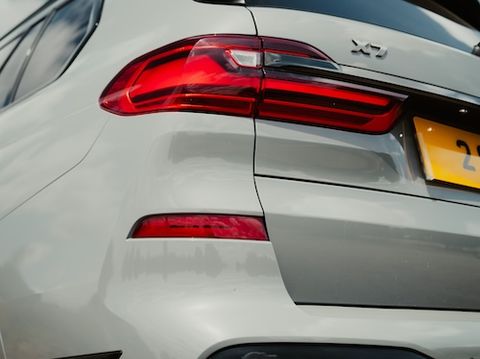
The BMW X7 sits at the top of BMW's SUV line-up, combining three-row practicality with the space, technology and comfort expected from a flagship luxury model. Introduced in the UK in 2019, it is larger than the X5 and was developed to accommodate up to seven adults rather than simply providing occasional third-row seating.
Although there has only been one generation of X7 so far, the engine range has changed significantly during its lifespan. Early examples include the xDrive30d, xDrive40i and performance-focused M50d, while later vehicles introduced the xDrive40d and V8-powered M50i. A substantial update then brought revised mild-hybrid engines and the current M60i xDrive.
This guide looks at the main BMW X7 models available on the used market, explaining how the different engines, performance levels and specifications compare.
BMW X7
The BMW X7 is the largest member of BMW’s X range and is designed around three full rows of passenger accommodation. Seven seats are standard, although selected versions can be specified with two individual comfort seats in the second row to create a six-seat configuration.
Its size also gives the X7 substantial luggage capacity. BMW quotes a maximum of 2,120 litres with the second and third rows folded, while air suspension is fitted to help provide a balance between comfort, handling and load-carrying ability.
All versions use BMW xDrive all-wheel drive and an automatic gearbox. Models buyers may encounter include:
- BMW X7 xDrive30d - The original six-cylinder diesel and one of the most accessible early X7 models.
- BMW X7 xDrive40d - A later and more powerful diesel, with mild-hybrid assistance on newer examples.
- BMW X7 xDrive40i - A six-cylinder petrol version providing smooth performance without moving to a V8.
- BMW X7 M50d - An early M Performance diesel with 400 hp and considerable torque.
- BMW X7 M50i - A V8 petrol M Performance model producing 530 hp.
- BMW X7 M60i xDrive - The current V8 performance flagship, combining 530 hp with 48-volt mild-hybrid technology.
BMW X7 xDrive30d
The xDrive30d formed the diesel entry point when the X7 was originally introduced.
Its 3.0-litre straight-six diesel produces 265 hp and 620 Nm of torque. BMW quoted a 0-62 mph time of 7.0 seconds for the original UK model.
Rather than chasing outright performance, the xDrive30d concentrates on the qualities that suit a large luxury SUV. The six-cylinder engine delivers useful low-speed torque, relaxed motorway performance and the ability to move a fully occupied vehicle without requiring a high-revving petrol engine.
Depending on age and original specification, used examples may feature BMW’s luxury-orientated equipment or the more visually assertive M Sport package.
An xDrive30d is likely to suit buyers who want:
- Six-cylinder diesel refinement
- Strong motorway ability
- Seven-seat practicality
- xDrive all-wheel drive
- Lower used prices than many later X7 variants
The xDrive30d was eventually replaced by the more powerful xDrive40d, making it primarily a used-market choice today.
BMW X7 xDrive40d
The BMW X7 xDrive40d succeeded the xDrive30d and brought substantially more diesel performance.
BMW initially introduced the 3.0-litre straight-six xDrive40d with 340 hp and 700 Nm of torque alongside 48-volt mild-hybrid technology. The later facelift developed the system further.
Current BMW technical data lists a maximum combined powertrain output of 352 hp and up to 720 Nm, with the combustion engine itself producing 340 hp. BMW quotes 0-62 mph in 5.9 seconds.
This makes the xDrive40d considerably quicker than the original xDrive30d while retaining the characteristics that make a diesel attractive in a large SUV.
Current specifications include:
- BMW X7 xDrive40d Excellence - Places greater emphasis on traditional luxury styling and refinement.
- BMW X7 xDrive40d M Sport - Introduces sportier exterior and interior design details.
- BMW X7 xDrive40d M Sport with additional M packages - Individual vehicles can add further styling, chassis and equipment options.
The xDrive40d is arguably one of the most versatile X7 models for drivers covering regular long-distance mileage. It provides enough performance to make the X7 feel substantially quicker than its dimensions suggest, while the diesel engine delivers the torque needed for motorway journeys and carrying passengers.
BMW X7 xDrive40i
The BMW X7 xDrive40i is the main six-cylinder petrol alternative to the diesel models.
When the X7 first arrived, its 3.0-litre straight-six petrol engine produced 340 hp and 450 Nm of torque. The original version could accelerate from 0-62 mph in 6.1 seconds.
BMW significantly revised the powertrain as part of the X7 facelift.
The current xDrive40i incorporates 48-volt mild-hybrid assistance and produces a maximum powertrain output of 381 hp and 540 Nm. Its 0-62 mph time has fallen to 5.8 seconds.
Current versions include:
- BMW X7 xDrive40i Excellence - Combines six-cylinder petrol performance with the more luxury-focused X7 design.
- BMW X7 xDrive40i M Sport - Adds a more athletic exterior and M-inspired interior treatment.
The xDrive40i is particularly suited to drivers who prefer petrol refinement but do not require the additional power and running costs of the V8 M Performance models.
BMW X7 M50d
The BMW X7 M50d was the original performance-focused diesel at the top of the launch range.
Its 3.0-litre straight-six diesel engine used multiple turbochargers to produce 400 hp and 760 Nm of torque, allowing the large SUV to reach 62 mph in 5.4 seconds.
The M50d also incorporated changes beyond its engine. BMW equipped the model with an M Sport differential, model-specific chassis tuning and dedicated M design details.
This makes the M50d an unusual proposition on the used market. It combines:
- 400 hp diesel performance
- 760 Nm of torque
- Seven-seat SUV practicality
- xDrive all-wheel drive
- M Performance chassis features
- Long-distance diesel characteristics
BMW eventually discontinued the M50d as it rationalised its high-performance diesel range, so there is no direct equivalent in the latest X7 line-up.
BMW X7 M50i
The BMW X7 M50i moved the performance emphasis from diesel torque to V8 petrol power.
Its 4.4-litre twin-turbocharged V8 produces 530 hp and 750 Nm of torque, giving the X7 a much stronger performance character than the regular six-cylinder versions.
The M50i also sits within BMW’s M Performance category rather than being a full BMW M vehicle. That distinction allows it to retain much of the comfort and luxury expected from an X7 while receiving considerably stronger performance and M-specific equipment.
The model typically includes:
- 4.4-litre V8 petrol engine
- BMW xDrive
- Eight-speed automatic transmission
- M Performance chassis technology
- M-specific exterior styling
- Sports-focused interior details
BMW also used the M50i as the basis for the limited X7 Dark Shadow Edition, of which only 500 were produced globally and ten were allocated to the UK.
BMW X7 M60i xDrive
The M60i xDrive replaced the M50i when BMW comprehensively updated the X7.
It continues to use a 4.4-litre V8, but the newer powertrain incorporates 48-volt mild-hybrid technology. Total output remains 530 hp, accompanied by 750 Nm of torque.
BMW quotes a 0-62 mph time of 4.7 seconds, making the M60i the quickest regular production X7 in the current UK line-up.
The M60i also receives hardware intended to distinguish it from an ordinary X7 fitted with M Sport styling.
Depending on specification, this includes:
- M TwinPower Turbo V8
- M Sport differential
- xDrive all-wheel drive
- Eight-speed Steptronic Sport transmission
- Performance-focused chassis calibration
- M-specific exterior design
- M-specific interior detailing
The M60i remains a seven-seat-capable luxury SUV rather than an uncompromising performance model, which is an important part of its appeal.
It is suited to buyers who want the most powerful current X7 and place greater importance on V8 performance than fuel economy.
Pre-Facelift BMW X7 vs Facelift BMW X7
One of the biggest decisions when buying an X7 is whether to choose the original version or the substantially revised model introduced for 2022.
The pre-facelift X7 has a more conventional BMW front-end design and includes models such as:
- xDrive30d
- xDrive40i
- M50d
- xDrive40d
- M50i
The facelift introduced the split-headlight front design now associated with BMW’s larger luxury models and brought extensive changes to the cabin and drivetrain range.
The revised line-up consists primarily of:
- BMW X7 xDrive40d
- BMW X7 xDrive40i
- BMW X7 M60i xDrive
All facelift engines incorporate 48-volt mild-hybrid technology. BMW also introduced the Curved Display, updated iDrive technology and an enhanced eight-speed Steptronic Sport transmission.
BMW X7 Excellence
Excellence represents the more traditionally luxurious side of the current X7 range.
It avoids some of the more aggressive M Sport styling details and instead emphasises the flagship character of the model through its exterior finishes and luxury-led presentation.
BMW currently offers both the xDrive40i and xDrive40d in Excellence specification.
The Excellence specification is likely to appeal most to buyers who want the X7 to feel more like a traditional luxury vehicle rather than a performance SUV.
Optional equipment can still make individual examples substantially different, so buyers should compare full factory specifications rather than relying on the Excellence badge alone.
BMW X7 M Sport
M Sport gives the standard six-cylinder X7 a more purposeful appearance without turning it into an M60i.
Typical differences centre on M-inspired body styling, wheels, interior details and optional performance-related packages.
Current xDrive40d and xDrive40i vehicles are available with M Sport specification, while additional M Sport Pro equipment can bring darker exterior detailing and further visual changes. BMW’s facelift specification included options such as extended M Shadow Line trim and M Sport brakes.
The important distinction is that M Sport is a specification, whereas M60i is an M Performance model with a different V8 powertrain.
An xDrive40d M Sport therefore retains the 3.0-litre diesel engine even though its appearance may share elements with the M60i.
Is the BMW X7 a Seven-Seater?
Seven seats are standard on the BMW X7, and unlike some SUVs where the third row is primarily intended for occasional use, BMW designed the original model to accommodate up to seven adults.
The current X7 can alternatively be specified with six seats.
Choosing the six-seat configuration replaces the three-person second-row bench with two individual comfort seats. These provide their own integrated armrests and create a clear walkway between the seats.
This gives used buyers two distinct layouts:
- Seven-seat X7 - Best for maximum passenger capacity.
- Six-seat X7 - Sacrifices one seat for greater second-row comfort and a more luxurious cabin layout.
When purchasing used, it is therefore worth checking the seating arrangement carefully rather than assuming every X7 has the same configuration.
Which BMW X7 Model Is Best?
The best BMW X7 depends on whether efficiency, luxury or performance carries the greatest importance.
For buyers considering an earlier model, the xDrive30d provides one of the simplest routes into X7 ownership. Its 265 hp six-cylinder diesel is well suited to long-distance use and offers significantly more affordable access to the model than newer variants.
The later xDrive40d is a stronger option for drivers who want diesel economy without sacrificing performance. Current versions produce up to 352 hp and 720 Nm from the mild-hybrid powertrain, making it quick enough for effortless motorway overtaking even with several passengers aboard.
Drivers who prefer petrol should consider the xDrive40i. The latest version produces 381 hp and reaches 62 mph in 5.8 seconds, giving it considerably stronger performance than the original 340 hp model.
The M50d is one of the more distinctive earlier choices. Its 400 hp diesel engine and 760 Nm of torque make it attractive to buyers who want M Performance pace but still prefer the characteristics of diesel power.
For V8 performance, the M50i provides 530 hp and is now an appealing used alternative to the newer M60i. Saxtons currently has several M50i examples available, making it particularly relevant within the prestige used market.
The M60i xDrive is the choice for buyers who want the latest and most performance-focused version. Its 530 hp V8 delivers 0-62 mph in 4.7 seconds while retaining the comfort, space and seven-seat capability expected from an X7.
Specification is another consideration. Excellence provides a more traditional luxury appearance, while M Sport gives the six-cylinder versions a more athletic character. Buyers prioritising rear passenger comfort may also want to search specifically for a six-seat example with individual second-row seats.
One point worth noting is that BMW currently offers no plug-in hybrid or fully electric X7. Buyers wanting an electrified X7 are therefore limited to the 48-volt mild-hybrid technology used by the latest petrol and diesel models. BMW’s current UK range remains petrol and diesel only.
Find a Used BMW X7 at Saxtons
Explore the latest used BMW X7 models available at Saxtons to compare engine, mileage, seating configuration and specification. With substantial differences between early and facelifted vehicles, checking the complete factory equipment, condition and service history can help you choose the X7 that best suits your requirements.
 4.2
(4,500+ reviews)
 4.5
(11,000+ reviews)
 4.3
(50+ reviews)