Halal Finance

What Is Halal Finance?
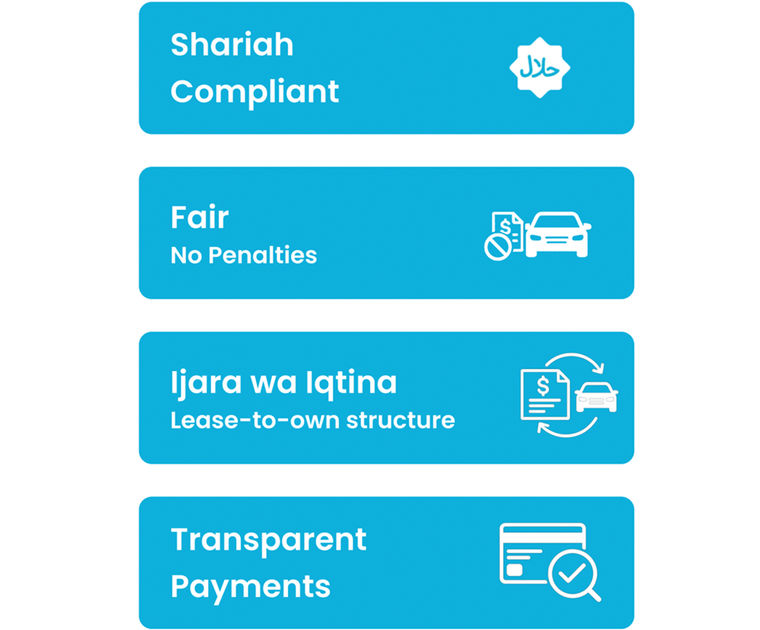
Halal car finance offers a Sharia-compliant way to purchase your vehicle without the use of interest. Rather than lending money, they structure the agreement around the car itself, with a fixed and fully transparent price agreed from the outset. This provides complete clarity on what you will pay, with no hidden charges and no interest, delivering a more considered and principled approach to car finance.
How Halal Finance Works
1. You choose the car
You pick the car you want from our stock, just like with normal finance.
2. The lender buys the car
Instead of lending you money (which would involve interest), the Islamic finance company buys the car outright.
3. The lender sells it to you at a fixed profit
The lender sells the car to you at a higher price than they paid, with the profit clearly agreed upfront. This is usually done through a structure called Murabaha (cost + profit sale).
4. You pay in fixed instalments
You repay that total agreed amount in monthly instalments. There’s no interest added later everything is fixed and transparent from the start.
Benefits of Halal Car Finance
No Interest (Riba)
- Halal: No interest charged at any stage.
- Traditional: Interest is applied and compounds over time.
Full Transparency
- Halal: Total price (including profit) agreed upfront, no hidden cost.
- Traditional: Interest rates, fees and charges can vary or be less clear.
Fixed Payments
- Halal: Monthly payments stay the same throughout
- Traditional: Payments can change depending on interest rates (especially with variable finance).
No Penalties Designed to Profit
- Halal: Late fees (if any) are usually not profit-driven and may go to charity.
- Traditional: Late payment fees and penalties are typically charged as additional income for the lender
Frequently Asked Questions
In traditional finance, you borrow money and pay it back with interest. In Halal finance, the provider buys the car on your behalf and sells it back to you at a fixed profit or leases it to you. Since money itself shouldn't generate more money (interest), the "cost" of the finance is a transparent, agreed-upon profit margin or rental fee.
Absolutely. Halal finance is open to everyone, regardless of faith. Many people choose it because they prefer the transparency of fixed costs, the absence of interest-based debt, and the ethical "risk-sharing" nature of the contracts.
Yes. To be Shariah-compliant, the product must be audited by a board of Islamic scholars. They ensure the contract avoids:
- Riba: Interest.
- Gharar: Excessive uncertainty or "hidden" fees.
- Haram industries: Financing for businesses related to alcohol, gambling, or tobacco.
Yes. The provider is certified by Alhamd Shariah Advisory - an independent trusted authority in Shariah compliance. This certification reflects the providers unwavering commitment to ethical financial practices.
This is Islamic finance. The product is from a Shariah-compliant car finance provider based in the UK.
The contract is based on Ijara wa Iqtina - a lease-to-own structure. The customer pays an agreed rental amount for the use of the vehicle during the term and at the end of the agreement ownership is transferred to them.
Yes. The provider purchases and owns the vehicle outright from Saxtons before entering into the final Ijara agreement with the customer. The customer is not borrowing money they are paying rent for the use of an asset that the provider owns, with the ability to own it at the end without a balloon payment.
As a regulated finance broker in the UK, they're legally required to display an APR (Annual Percentage Rate) equivalent so that our customer can make fair comparisons between products. This is a regulatory requirement and does not mean interest is being charged. The rental charges are expressed as an APR equivalent - just as a conventional lender would express their interest rate. The two are fundamentally different in nature.
 4.2
(4,500+ reviews)
4.2
(4,500+ reviews)
 4.5
(11,000+ reviews)
4.5
(11,000+ reviews)
 4.3
(50+ reviews)
4.3
(50+ reviews)