What Separates the Different BMW X3 Variants?
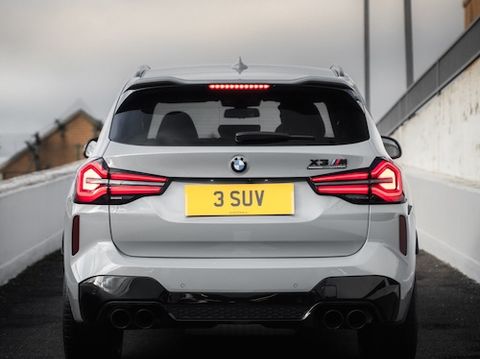
The BMW X3 sits at the heart of BMW's SUV range, offering more interior space than the X1 while remaining noticeably more compact than the larger X5. Across its different generations, it has become available with everything from efficient four-cylinder diesel engines to plug-in hybrid technology and high-performance BMW M powertrains.
For anyone shopping for a used BMW X3, the engine badge can make a significant difference to how the vehicle performs and the type of driving it suits. Models such as the xDrive20d concentrate on everyday efficiency, while the xDrive30d introduces six-cylinder diesel power. The xDrive30e offers plug-in hybrid capability, and versions such as the M40i, M40d and X3 M Competition take performance considerably further.
This guide looks at the main BMW X3 models found on the used market and explains the differences between their engines, drivetrains and specifications.
BMW X3
The BMW X3 is a five-seat premium SUV designed to combine everyday practicality with the more driver-focused characteristics associated with BMW. Most recent versions use BMW xDrive all-wheel drive and an automatic transmission, although specifications vary across generations.
The third-generation X3, known as the G01, arrived in 2017 and forms a large proportion of the current used market. It was launched with petrol and diesel engines ranging from the xDrive20i and xDrive20d through to the six-cylinder xDrive30d and M40i. BMW later expanded the range with the xDrive30e plug-in hybrid, M40d and X3 M Competition.
A fourth-generation BMW X3 has since been introduced, bringing revised mild-hybrid engines, an improved plug-in hybrid system and a new M50 xDrive performance model.
Across recent used examples, key models include:
- BMW X3 xDrive20i - A four-cylinder petrol version suited to everyday driving.
- BMW X3 xDrive20d - A popular four-cylinder diesel balancing fuel economy with useful torque.
- BMW X3 xDrive30d - A six-cylinder diesel offering significantly stronger performance.
- BMW X3 xDrive30e - A petrol plug-in hybrid providing electric driving capability.
- BMW X3 M40d - An M Performance diesel with 340 hp and substantial torque.
- BMW X3 M40i - A six-cylinder petrol M Performance model.
- BMW X3 M Competition - The dedicated BMW M version, producing 510 hp in later examples.
- BMW X3 20 xDrive - The petrol mild-hybrid version offered in the latest generation.
- BMW X3 M50 xDrive - The current M Performance flagship with 398 hp.
BMW X3 xDrive20i
The BMW X3 xDrive20i is one of the more accessible petrol-powered versions of the third-generation X3.
Facelifted G01 models produce 184 hp and 300 Nm of torque from their four-cylinder petrol engine, with power sent through an automatic transmission and xDrive all-wheel drive. BMW quoted 0-62 mph in 8.4 seconds for this version.
Rather than prioritising outright performance, the xDrive20i offers a straightforward petrol alternative for buyers who may not cover the annual mileage needed to make diesel particularly attractive.
Common specifications on the used market include:
- BMW X3 xDrive20i SE - A relatively understated specification focused on comfort and everyday equipment.
- BMW X3 xDrive20i xLine - Adds SUV-inspired exterior detailing and a more distinctive appearance.
- BMW X3 xDrive20i M Sport - Introduces M Sport body styling, alloy wheels and interior changes.
- BMW X3 xDrive20i M Sport Pro - Later examples can add further M-inspired styling and equipment.
BMW X3 xDrive20d
The BMW X3 xDrive20d is one of the most common versions found on the used market and has been an important part of the X3 range for several generations.
Third-generation facelift models use a 2.0-litre four-cylinder diesel producing 190 hp and 400 Nm of torque. BMW quoted a 0-62 mph time of 7.9 seconds, giving the xDrive20d enough performance for motorway driving without moving into the larger six-cylinder diesel engines.
Later G01 models also introduced mild-hybrid assistance to the diesel powertrain.
Used specifications can include:
- BMW X3 xDrive20d SE - A comfort-focused version with less aggressive exterior styling.
- BMW X3 xDrive20d xLine - Uses additional exterior trim to emphasise the X3’s SUV character.
- BMW X3 xDrive20d M Sport - Combines the diesel engine with BMW’s more athletic M Sport design.
- BMW X3 xDrive20d M Sport Pro - Adds further M-specific exterior and interior features on later cars.
BMW X3 xDrive30d
The BMW X3 xDrive30d provides a considerable step up from the xDrive20d by replacing the four-cylinder engine with a 3.0-litre straight-six diesel.
Early third-generation examples produced 265 hp and 620 Nm, allowing the X3 to accelerate from 0-62 mph in 5.8 seconds.
Following later updates, output increased to 286 hp and 650 Nm of torque, reducing the 0-62 mph time to 5.7 seconds.
Its six-cylinder configuration gives the xDrive30d a smoother and more effortless character than the smaller diesel, particularly when accelerating at motorway speeds.
Common used versions include:
- BMW X3 xDrive30d xLine - Combines six-cylinder diesel power with more traditional SUV styling.
- BMW X3 xDrive30d M Sport - Adds more aggressive M Sport exterior and interior design.
- BMW X3 xDrive30d M Sport Pro - Selected later vehicles include additional M styling and equipment.
BMW X3 xDrive30e
The BMW X3 xDrive30e introduced plug-in hybrid technology to the third-generation X3.
It combines a 2.0-litre four-cylinder petrol engine with an electric motor and BMW xDrive all-wheel drive. Early versions produced 252 hp under normal operation, while BMW’s XtraBoost function could temporarily raise output to 292 hp. BMW quoted an electric-only range of up to approximately 34 miles for the original model.
The hybrid system allows shorter trips to be completed using electric power while retaining a petrol engine for longer journeys.
Used specifications include:
- BMW X3 xDrive30e SE - An earlier entry specification with plug-in hybrid technology.
- BMW X3 xDrive30e xLine - Combines hybrid capability with a more traditional SUV appearance.
- BMW X3 xDrive30e M Sport - Adds BMW’s sportier M Sport exterior and interior styling.
- BMW X3 xDrive30e M Sport Pro - Higher-specification examples can include further M-related equipment and design changes.
BMW X3 M40d
The BMW X3 M40d takes diesel performance much further than the xDrive20d or xDrive30d.
Later third-generation versions use a 3.0-litre straight-six diesel producing 340 hp and 700 Nm of torque. BMW quotes 0-62 mph in 4.9 seconds, placing it firmly within performance-SUV territory despite retaining a diesel powertrain.
As an M Performance model, the M40d also receives changes beyond the engine, including more purposeful styling and performance-focused chassis equipment.
The model is particularly distinctive because it combines substantial torque and rapid acceleration with the characteristics that make diesel attractive for longer-distance driving.
BMW X3 M40i
The BMW X3 M40i is the petrol alternative within the third-generation M Performance range.
When the G01 X3 was introduced, its 3.0-litre straight-six petrol engine produced 360 hp and 500 Nm of torque, with BMW quoting 0-62 mph in 4.8 seconds.
Later facelift examples retained a 360 hp output and reached 62 mph in approximately 4.9 seconds.
The M40i also receives M-specific chassis, styling and drivetrain changes that distinguish it from an ordinary X3 fitted with an M Sport styling package.
Its position in the range makes it particularly appealing to buyers who want strong six-cylinder petrol performance without moving to the more specialised X3 M Competition.
The X3 M40i combines everyday usability with a noticeably more performance-focused character, making it one of the more versatile performance options in the used X3 range.
BMW X3 M Competition
The BMW X3 M Competition sits in a different category from the M Sport and M Performance variants.
Developed by BMW M, it uses a dedicated high-performance version of BMW’s 3.0-litre straight-six petrol engine alongside M xDrive all-wheel drive, an eight-speed M Steptronic transmission and M-specific chassis technology.
The updated X3 M Competition produces 510 hp and 650 Nm of torque. BMW quotes a 0-62 mph time of just 3.8 seconds.
Its specification includes performance-focused features such as:
- BMW M xDrive
- Eight-speed M Steptronic transmission
- M-specific suspension and chassis tuning
- M Sport exhaust system
- Dedicated BMW M exterior styling
- M-specific interior controls and sports seats
Earlier X3 M Competition models also produced 510 hp but developed 600 Nm of torque and reached 62 mph in 4.1 seconds.
New BMW X3 20 xDrive
The fourth-generation X3 changed BMW’s model naming slightly, with the previous xDrive20i replaced in the UK by the X3 20 xDrive.
Its petrol powertrain uses 48-volt mild-hybrid technology and develops a total system output of 208 hp and 330 Nm of torque. BMW quotes 0-62 mph in 7.8 seconds.
Current specifications include:
- BMW X3 20 xDrive xLine
- BMW X3 20 xDrive M Sport
- BMW X3 20 xDrive M Sport Pro
The latest model retains all-wheel drive and an eight-speed automatic transmission, while bringing a completely redesigned exterior and cabin compared with the outgoing G01 X3.
New BMW X3 20d xDrive
Diesel remains available in the latest X3 through the 20d xDrive.
Its 2.0-litre four-cylinder diesel uses 48-volt mild-hybrid assistance and develops 197 hp and 400 Nm of torque. BMW quotes 0-62 mph in 7.7 seconds and official combined fuel economy of up to 47.1 mpg depending on specification.
Like the petrol version, it is available in xLine, M Sport and M Sport Pro configurations.
New BMW X3 30e xDrive
The latest-generation X3 30e xDrive substantially improves on the plug-in hybrid capability of the previous model.
The current system produces 299 hp and 450 Nm of torque, giving a 0-62 mph time of 6.2 seconds. Its larger 19.7 kWh battery provides an official WLTP electric range of approximately 52 to 54 miles in the latest UK specification.
Charging capability has also increased, with AC charging supported at up to 11 kW.
The 30e xDrive is offered in specifications including:
- BMW X3 30e xDrive xLine
- BMW X3 30e xDrive M Sport
- BMW X3 30e xDrive M Sport Pro
BMW X3 M50 xDrive
The BMW X3 M50 xDrive sits at the top of the current-generation range and replaces the previous X3 M40i as the main petrol M Performance model.
Its 3.0-litre six-cylinder petrol engine is supported by 48-volt mild-hybrid technology, producing a total system output of 398 hp and 580 Nm of torque. BMW quotes 0-62 mph in 4.6 seconds and a top speed of 155 mph.
The M50 receives performance-oriented equipment including an M Sport differential, model-specific chassis tuning and M exterior and interior detailing.
Unlike the previous-generation X3 M Competition, the M50 remains an M Performance model rather than a full BMW M vehicle.
Earlier BMW X3 Models
The X3 has been available since 2003, so buyers searching further down the used market will encounter two generations that pre-date the G01.
The second-generation F25, produced during the 2010s, includes models such as:
- BMW X3 sDrive18d
- BMW X3 xDrive20d
- BMW X3 xDrive30d
- BMW X3 xDrive35d
- BMW X3 xDrive20i
- BMW X3 xDrive28i
- BMW X3 xDrive35i
Earlier vehicles use different engines, transmissions and infotainment systems from the current generations. A badge such as xDrive20d can therefore refer to several different power outputs depending on the vehicle’s age.
When comparing an older X3, the registration year, engine output and complete specification are particularly important.
Which BMW X3 Model Is Best?
Choosing between BMW X3 models largely comes down to how often you drive, the type of journeys you complete and how much performance you want.
For regular motorway use, the X3 xDrive20d is one of the most straightforward options. Its four-cylinder diesel offers 400 Nm of torque in later third-generation models without the additional performance of the six-cylinder alternatives.
The xDrive30d is better suited to buyers who want greater refinement and acceleration. Its six-cylinder diesel produces 286 hp and 650 Nm in later examples, making it substantially stronger than the xDrive20d.
Drivers covering fewer miles may prefer the xDrive20i, while buyers with regular access to charging should consider the xDrive30e. The third-generation plug-in hybrid offers up to around 34 miles of original official electric range, while the latest X3 30e extends this to more than 50 miles.
For greater performance, the M40d combines a six-cylinder diesel with 700 Nm of torque, while the M40i provides a more traditional six-cylinder petrol performance experience. Both offer a considerable increase in pace without moving into a full BMW M model.
The X3 M Competition is the option for drivers who want the most focused version of the third-generation X3. With 510 hp and a 0-62 mph time of 3.8 seconds in later models, it offers performance on a completely different level from the regular range.
For the latest generation, the X3 20 xDrive provides petrol mild-hybrid power, the 20d xDrive remains the long-distance diesel option and the 30e xDrive provides significantly improved plug-in hybrid capability. The M50 xDrive sits at the top of the current line-up with 398 hp and six-cylinder petrol performance.
Specification should be considered separately from the engine. xLine generally provides a more traditional SUV appearance, while M Sport gives the X3 more aggressive exterior styling and a sportier interior. M Sport Pro adds further M-inspired visual and equipment upgrades on more recent examples.
The broad range of available powertrains is one of the X3’s biggest strengths. Whether you prioritise motorway economy, electric-assisted commuting, six-cylinder refinement or outright performance, there is a version designed around those requirements.
Find a Used BMW X3 at Saxtons
Browse the latest used BMW X3 models available at Saxtons to compare engines, mileage, age and individual equipment. With several generations and a wide selection of engine configurations available, checking each vehicle’s complete specification, condition and service history can help you identify the X3 that best fits your requirements.
 4.2
(4,500+ reviews)
4.2
(4,500+ reviews)
 4.5
(11,000+ reviews)
4.5
(11,000+ reviews)
 4.3
(50+ reviews)
4.3
(50+ reviews)