SUV vs Estate: Which is More Practical?
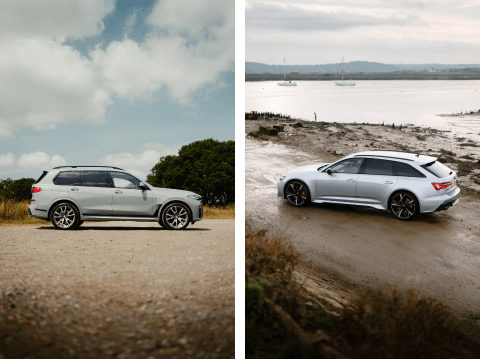
Do you really need a mid-size SUV, or can you get away with an estate? It’s a question that comes up more and more, especially as SUVs continue to dominate the market. To properly understand the difference, it’s not enough to look at specs on paper, you need to see how they work in real life.
We’ve put two comparable cars head-to-head to find out, focusing on everyday usability rather than just numbers. Watch the full video, or keep reading for a breakdown of how they compare.
Boot Space: Numbers vs Real-World Use
On paper, SUVs tend to come out ahead. In this case, the SUV offers slightly more boot capacity than the estate. But those figures don’t always tell the full story.
In practice, the way that space is shaped makes a big difference. The estate offers a longer load area when the seats are folded down, which immediately becomes useful when carrying longer items. Things that need that extra bit of length slide in more naturally and require less adjustment.
The SUV, while slightly larger overall, focuses more on height. It feels bigger when you open the boot, but that space is distributed differently. So while it may technically have more capacity, it doesn’t always translate to being more usable depending on what you’re loading.
Length vs Height: What Do You Actually Carry?
This is where the real difference starts to show.
The estate gives you a long, low loading area. That makes it ideal for items that need to lie flat or stretch across the boot. Whether it’s furniture, equipment or anything awkwardly shaped, that extra length becomes a real advantage.
The SUV, on the other hand, feels taller and more upright. You get more vertical space, which makes it easier to stack items or fit bulkier objects that need height rather than length.
Neither is better across the board, it simply depends on what you’re carrying most often. If your typical load needs space to stretch out, the estate works better. If it needs room to stand up, the SUV starts to make more sense.
Everyday Practicality: Dogs, Kids and Daily Use
Beyond boot space, everyday usability is where things become more personal.
If you’ve got a dog, the SUV’s extra height gives them more space once they’re inside. It feels more open and less restricted. However, that same height can make getting in and out a bit more of a jump, particularly for smaller or older dogs.
The estate is lower, which makes access easier. It’s less of a step up, which can make a noticeable difference day to day, even if the space inside is slightly more limited.
The same kind of trade-off appears when fitting a child seat. In an estate, you naturally have to bend down more, which can become uncomfortable if you’re doing it regularly. In an SUV, the higher seating position makes it easier to place and secure the seat without as much strain.
It’s a small difference, but one that adds up over time.
Rear Seat Space: Closer Than You Think
You might expect the SUV to feel significantly more spacious in the back, but in reality, the gap is much smaller than you’d think.
The SUV does feel more open thanks to its taller shape, with slightly more headroom and an airier cabin. However, the estate still offers strong legroom and overall comfort, even with taller passengers in the front.
For most people, rear seat space won’t be the deciding factor. Both are perfectly usable for passengers, and the difference comes down more to how the space feels rather than how much there actually is.
Driving Position: Preference Over Practicality
From the driver’s seat, the choice becomes more about how you like to drive.
In an estate, you sit lower, which gives a more traditional, connected feel to the road. It’s slightly sportier and can feel more engaging, especially on longer drives or more open roads.
In an SUV, you sit higher, which gives you a better view of the road ahead and a stronger sense of visibility overall. Many drivers prefer that more commanding position, particularly in traffic or urban environments.
There’s no right answer here, it’s purely down to personal preference.
Handling Bulkier Items
When it comes to larger, more awkward items, the SUV starts to show its strengths.
The extra height makes it easier to load bulkier objects that need vertical space. You’ve got more flexibility in how you position them, and it’s generally easier to make things fit.
In the estate, those same items can become more difficult to work around. While the length helps in some situations, the lack of height can be a limiting factor.
Again, it depends on what you’re carrying, but this is one area where the SUV often has the edge.
When you break it down, the difference between an SUV and an estate isn’t as big as many people expect.
In terms of overall practicality, they’re surprisingly close. The estate is better suited to longer items and offers a slightly more efficient use of space in that direction. The SUV, meanwhile, is more versatile when it comes to height, ease of access and day-to-day convenience.
For families, the SUV’s higher seating position and easier access can make a real difference. For those regularly carrying longer items or wanting a more traditional driving feel, the estate remains a strong option.
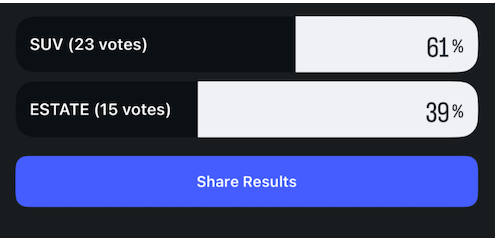
Interestingly, when we ran a poll on Saxtons’ Instagram stories, the results leaned towards SUVs, with 61% of voters choosing an SUV compared to 39% for estates. That reflects what we tend to see more broadly. SUVs appeal to a wider audience, largely because of that added convenience and driving position.
Ultimately, it’s not about which is better on paper, it’s about which fits your lifestyle.
 4.1
(3,000+ reviews)
4.1
(3,000+ reviews)
 4.6
(8,000+ reviews)
4.6
(8,000+ reviews)
 4
(250+ reviews)
4
(250+ reviews)