BMW X7 vs Volvo XC90: Which Seven-Seat SUV Works Best for Real Life?
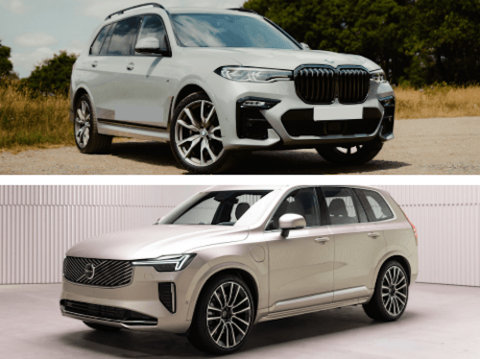
When it comes to luxury seven-seat SUVs, two models we're often asked about are the BMW X7 and the Volvo XC90. Both offer strong road presence, premium interiors and the practicality you expect from a large family SUV. The key question is how they actually perform when all seven seats are in use, because that’s where differences start to show.
From our perspective, it’s less about which is “better” on paper and more about how each one fits into everyday life. View our video or read on to find out our thoughts on it.
Access to the Third Row
Starting with the BMW X7, the experience immediately feels more premium. Accessing the third row is effortless thanks to electrically operated second-row seats. At the press of a button, the seat slides forward smoothly, opening up a generous space to climb through.
It’s a simple detail, but it sets the tone. Everything feels considered and easy, especially if you’re regularly using all seven seats.
The Volvo XC90 takes a different approach. Instead of relying on electric controls, it uses a manual system. The second-row seat slides and tips forward in one movement, giving instant access to the third row.
In reality, this can actually be quicker. If you’re loading kids into the back in a hurry, not having to wait for motors can make a noticeable difference.
Third-Row Comfort
Once you’re in the back, both cars perform better than you might expect.
In the BMW X7, the third row feels surprisingly comfortable. The seats are soft, supportive and well finished, with practical touches like cup holders and seatbelt holders. It feels like a proper extension of the cabin rather than an afterthought. Headroom can be slightly tighter depending on spec, especially with a panoramic roof, but for shorter journeys it’s a genuinely usable space.
The XC90’s third row is a little more straightforward. Legroom is slightly tighter, although you can adjust the middle row to create more space if needed. The seats are firmer, but still comfortable enough, and you get similar practical features like cup holders and storage.
Overall, the difference isn’t as big as you might expect. The BMW feels more premium, but the Volvo still does the job well.
Boot Space with Seven Seats Up
This is where things get more interesting, because real-world practicality matters just as much as comfort.
With all seven seats in place, the BMW X7 still offers a usable boot. We tested it with a full-size four-wheel pram and it fits without too much trouble. That’s a strong result, especially for a vehicle of this type.
Fold the rear seats down and the X7 really opens up, offering around 750 litres of space. At that point, it becomes a seriously capable load area for longer trips, luggage or bulky items.
The Volvo XC90 also holds its own. With all seats up, you get around 320 litres of space, which is still very usable. The same pram fits in, albeit sideways, and Volvo has added thoughtful touches like shopping hooks and a foldable divider to keep things organised.
From our perspective, this is where the XC90 shows its strengths. It might not be as large overall, but it’s been designed with everyday use in mind.
Practicality vs Luxury
The biggest difference between these two comes down to how they approach the same brief.
The BMW X7 leans heavily into luxury. Electric seat operation, softer materials and a more refined third row all contribute to a more premium experience. It’s the kind of car where everything feels smooth and effortless.
The Volvo XC90, on the other hand, focuses on practicality. The manual seat system is quicker to use in real life, the layout is simple and intuitive, and small details throughout the cabin make it easy to live with day to day.
Which One Should You Choose?
From our perspective, both cars do exactly what they’re designed to do, just in slightly different ways.
If you want the most luxurious seven-seat experience, with everything operating seamlessly at the touch of a button, the BMW X7 is hard to ignore. It feels more premium, especially in how it handles access and comfort in the third row.
If your priority is everyday usability, speed and practicality, the Volvo XC90 still stands out. It’s quick to use, cleverly designed and often represents better value, especially when you consider how close it gets to the BMW in real-world use.
Our Final Thoughts
The BMW X7 and Volvo XC90 are both excellent seven-seat SUVs, and neither feels like a compromise.
The X7 delivers a more luxurious, polished experience, while the XC90 proves that simple, well-thought-out design can be just as effective.
From our perspective, the right choice comes down to how you’ll use it. If you value refinement and comfort above all else, the X7 makes a strong case. If you want something practical, efficient and easy to live with, the XC90 remains one of the most complete family SUVs available.


 4.2
(4,500+ reviews)
4.2
(4,500+ reviews)
 4.5
(11,000+ reviews)
4.5
(11,000+ reviews)
 4.3
(50+ reviews)
4.3
(50+ reviews)